FOR IMMEDIATE RELEASE
BC Community Alliance Brings Black Youth Voice, Systems Change Priorities, and Community-Based Recommendations to the 5th Session of the UN Permanent Forum on People of African Descent
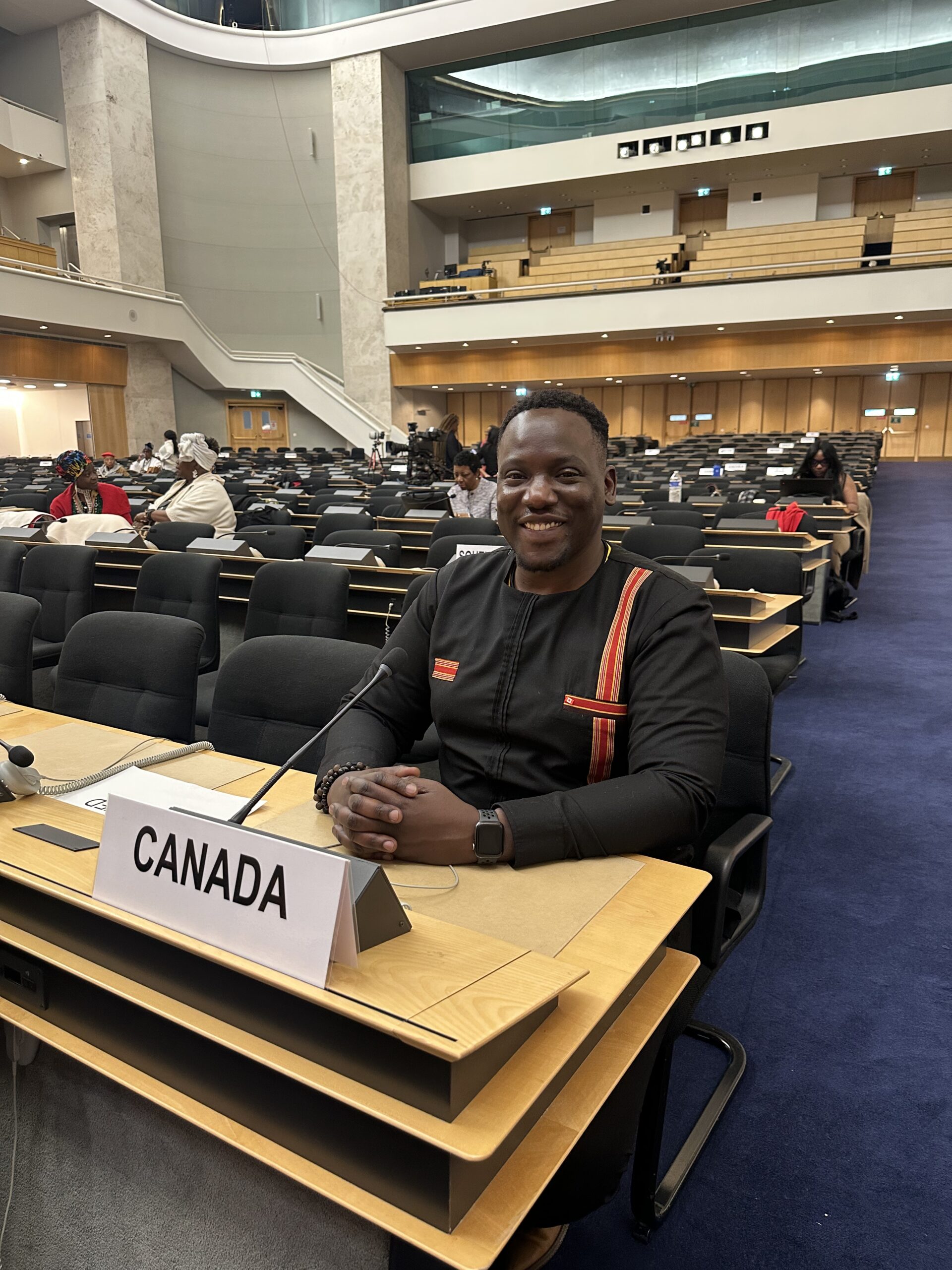
GENEVA, SWITZERLAND / BRITISH COLUMBIA, CANADA — April 2026 — BC Community Alliance (BCCA) participated in the 5th Session of the United Nations Permanent Forum on People of African Descent, held in Geneva from 14 to 17 April 2026. The Forum, established by the UN General Assembly in 2021 as a permanent consultative mechanism and advisory body to the Human Rights Council, convenes governments, civil society, experts, and community leaders to advance the rights, recognition, justice, and development of people of African descent worldwide. This year’s session focused on expanding human rights under the Second International Decade for People of African Descent (2025–2034), with particular attention to reparatory justice, youth, and implementation.
Representing BCCA at the Forum, Brian Seremba brought forward a perspective rooted in both lived experience and community-led work in British Columbia. His intervention highlighted the realities facing Black youth in schools, the need to move beyond symbolic inclusion, and the urgency of building practical systems that shift power, resources, and decision-making closer to Black communities.
BCCA is a Black-led, community-based nonprofit founded in response to anti-Black racism in British Columbia’s education system. Its mission centres on advocacy and policy reform, direct supports for students and families, youth and family leadership in decision-making, and tech-enabled tools such as the Safe School Hub. BCCA’s theory of change connects education, economic opportunity, storytelling, and data as mutually reinforcing levers for systemic change.
Over the past several years, BCCA has built a growing ecosystem of programmes and platforms to support Black youth and families across British Columbia. This includes the Supports for Student Learning Program (SSLP), the Safe School Hub, the Family Services Program, the District Student Council, the Parent and Caregiver Network for Racial Justice, and the Community Venture Hub / SSLP Venture Hub. BCCA’s internal handbook describes this work as spanning advocacy and policy, training and curriculum, and direct community programming and digital infrastructure.
BCCA’s message at the Forum was informed by its own program data and community research. In its SSLP final report, BCCA states that it conducted a 2024 Anti-Racism in Education Survey involving 400 Black students from Metro Vancouver, Surrey, and surrounding districts. According to that report, 90% of respondents reported experiencing or witnessing anti-Black racism in school environments, 72% felt incidents were inadequately addressed, 64% reported a lack of access to mentorship or culturally representative support staff, and 58% said racism negatively affected their academic motivation and mental well-being. The same report states that BCCA directly supported 120 Black youth through SSLP, while reaching hundreds more through surveys, outreach, forums, and digital resources.
These findings reinforced the core message BCCA brought to Geneva: Black youth are already leading. They are mediating conflict, supporting one another, navigating exclusion, and creating solutions inside systems that were never designed for them. The issue is not a lack of leadership or potential. The issue is whether institutions are prepared to invest in the infrastructure required for that leadership to thrive.
At the Forum, BCCA emphasised that the future of international dialogue on people of African descent must be measured not only by visibility but also by implementation. BCCA’s contribution aligned with the Forum’s broader focus on practical follow-through, particularly in relation to youth participation, inclusion, and accountability. The 2026 UN session overview notes that one panel specifically examined the challenges facing young people of African descent, including unfair treatment in education systems, barriers in the job market, racial profiling, and lack of representation in public institutions and political life.
Recommendations Shared by BC Community Alliance
Drawing from BCCA’s speech, program architecture, and community-rooted policy approach, the organization advanced the following priorities:
1. Scale youth-led financing and coordination mechanisms.
BCCA called for greater investment in structures that are led with, and accountable to, young people. In particular, it pointed to the need for a more connected Global Youth Fund and Forum that would enable youth-led and youth-serving organizations to access resources, collaborate across borders, and expand their impact. BCCA framed this as a next step in scaling youth-led implementation, not simply creating more discussion spaces.
2. Move from participation to youth governance.
BCCA urged institutions to create structures that move Black youth from consultation into decision-making. This recommendation reflects BCCA’s own operating model, which embeds youth leadership through its District Student Council, youth advisory roles, and committee participation in program and governance processes. BCCA’s handbook states that youth-led bodies co-design programming and platform features, and that committees affecting youth or families must include youth representation.
3. Invest in community-rooted infrastructure, not one-off interventions.
BCCA emphasized that Black communities need durable infrastructure: not only events and statements, but systems. Internally, BCCA describes its work as building linked structures through SSLP, Safe School Hub, Family Services, parent and caregiver governance, and the Venture Hub. Its SSLP report further describes the transition from a program model into a broader youth economic infrastructure through the Community Venture Hub, including real-world enterprise pathways, reinvestment models, and connected mentorship and reporting systems.
4. Strengthen reparatory justice through practical mechanisms.
BCCA supported the Forum’s growing attention to reparatory justice and argued that justice must be operationalized through concrete measures, including policy reform, resource access, institutional accountability, and restoration for communities facing the ongoing effects of historical and structural anti-Black racism. Reparatory justice was a central focus of the 2026 session.
5. Expand race-disaggregated, community-governed data systems.
BCCA called for data systems that do not merely document harm, but help communities influence policy and hold institutions accountable. This mirrors BCCA’s own emphasis on evidence-based advocacy and community-rooted data governance through the Safe School Hub and its parent/caregiver structures. The Parent and Caregiver Network for Racial Justice is described in BCCA materials as a co-governance and action group that advances family advocacy, community accountability, and data sovereignty in partnership with youth.
6. Build stronger pathways between local realities and global policy.
BCCA stressed that international frameworks must remain accountable to lived experience. The organization’s contribution to the Forum focused on connecting the realities of Black youth in British Columbia to global conversations on education, safety, development, and inclusion. This approach is consistent with BCCA’s stated commitment to linking data, story, and policy, and to building systems where Black youth and families can live, learn, and lead with safety and dignity.
Brian Seremba, Executive / Staff Director of BC Community Alliance, said:
“We are not starting from scratch. Our communities have already built models of leadership, care, advocacy, and innovation. The task now is to scale what works, resource what is community-led, and ensure that Black youth are not only heard, but trusted, supported, and positioned to lead.”
BCCA’s participation in the Forum also builds on its wider work in British Columbia and national ecosystems. Its handbook notes that BCCA has helped influence anti-racism data legislation and the Anti-Racism Act, co-developed the Safe School Hub as a platform for reporting incidents of school-based racism and accessing support, and built partnerships through the Black Innovation Zone and other community networks.
As the Permanent Forum marks five years of convening and recommendation-making, BCCA is calling for the next phase to focus on implementation, resourcing, and accountability. For BCCA, that means supporting the institutions, platforms, and youth-led ecosystems that can translate dialogue into measurable change in the daily lives of Black communities.
About BC Community Alliance
BC Community Alliance is a Black-led, community-based nonprofit in British Columbia advancing equity, safety, well-being, and economic mobility for Black, African, and Caribbean communities. Its work includes advocacy and policy reform, youth leadership development, family support, anti-racism training, entrepreneurship pathways, and systems-change platforms such as the Safe School Hub and Supports for Student Learning Program.
Media Contact
Brian Seremba
Executive / Staff Director, BC Community Alliance
brian@bccommunityalliance.com